

Mekelle/Tel Aviv/Nairobi/Pretoria/London
Egypt’s Expanding Footprint in Djibouti: A strategic plot to keep Ethiopia landlocked
By Chekole Alemu
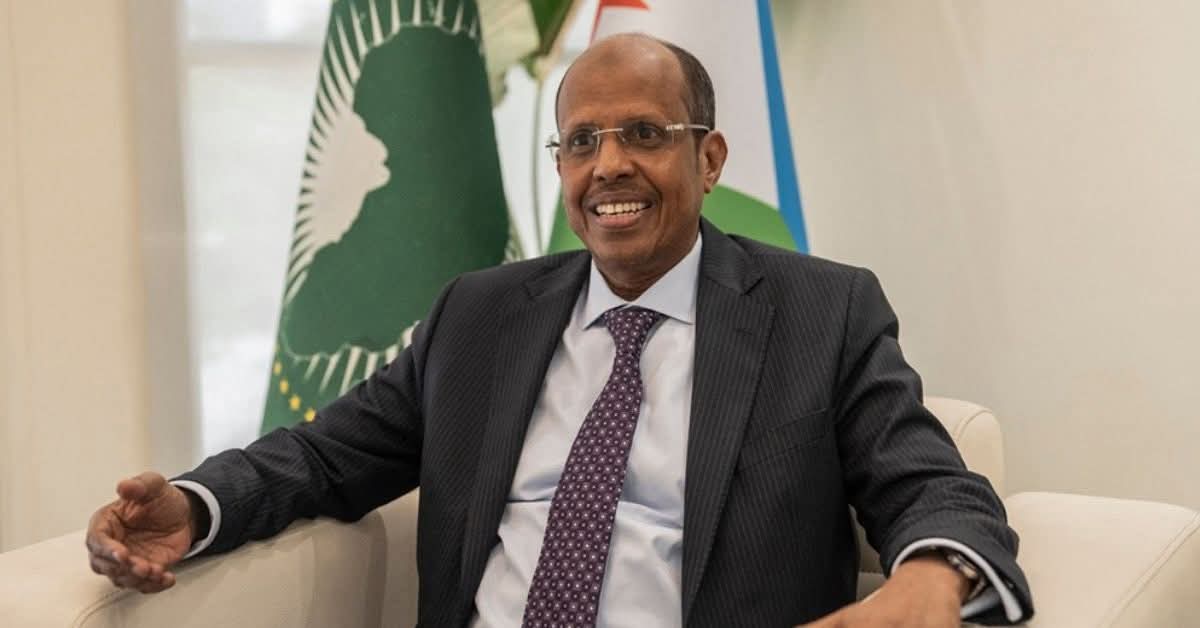
A year and a half ago, Mahmoud Ali Youssouf, then Djibouti’s Foreign Minister and now the Chairperson of the African Union, made a statement that seemed to close the door on foreign military bases in his small, crowded nation. When asked about Ethiopia’s interest in a naval base in the port city of Tadjoura, Youssouf responded unequivocally: “No, it’s a small country, which is already crowded. We have even turned down offers from other countries.” At the time, this seemed to signal Djibouti’s preference for maintaining its neutral stance in the region.
Fast forward to today, and Djibouti has inked a framework deal with Egypt for a container terminal and a long-term 15-hectare land lease, purportedly for commercial purposes. However, the economic rationale for this arrangement remains questionable. Egypt is not a dominant player in the maritime services industry, and the leased area of 15 hectares is hardly sufficient to support a major commercial venture. In fact, the economic landscape and Egypt’s existing port infrastructure raise doubts about whether such a deal could be purely business-oriented.
Military Implications of Egypt’s Presence in Djibouti
The size of Egypt’s economy and the proximity of its own ports make the justification for this land lease weak at best. In contrast, larger Asian economies have often opted for joint ventures or terminal concessions to conduct business in Djibouti rather than outright land leases. This raises suspicions about Egypt’s true intentions. A mere 15 hectares could easily accommodate a small military presence, potentially for a tactical depot, troops, and intelligence gathering operations. If Egypt plans to use this land to monitor Ethiopia’s maritime activities especially related to its ongoing development of the Grand Ethiopian Renaissance Dam (GERD) the reasoning becomes clearer.
This could represent the beginning of a new Egyptian military outpost in Djibouti, a foothold that could become increasingly entrenched over time, complicating any potential efforts to dislodge it. The Egyptian strategy appears to be expanding its influence across the Horn of Africa, reinforcing its long-standing desire to monitor and exert control over Ethiopia’s development in the region, particularly when it comes to the Nile River and its tributaries.
Mahmoud Ali Youssouf’s Shifting Position
The irony is hard to miss. Mahmoud Ali Youssouf, who once positioned himself as a defender of Ethiopia’s interests in the Horn of Africa, seems to have abandoned those commitments. As Djibouti’s foreign minister, Youssouf had been a vocal proponent of Ethiopia’s sovereignty and its development aspirations in the region. However, now, as the AU chairperson, his actions suggest a shift in priorities, especially when seen through the lens of Djibouti’s growing ties with Egypt. The land lease deal with Egypt represents a pivot away from the support Djibouti had once offered Ethiopia in regional matters.
In recent weeks, Egypt’s foreign minister issued a pointed warning to Ethiopia during an interview with Saudi media, cautioning against any new hydroelectric power projects on the Blue Nile without Egyptian approval. This public stance reveals the growing audacity of Egypt’s position on Ethiopia’s water resources, signaling a more assertive regional posture, possibly emboldened by Djibouti’s new agreement with Egypt.
A Broader Strategy of Encirclement
The wider strategic context surrounding these developments is impossible to ignore. Egypt’s increasing influence in Djibouti is part of a broader plan to encircle Ethiopia, a country that has long been central to regional politics and economic dynamics. Egypt’s engagement in the Horn of Africa is not limited to Djibouti. The creation of new states such as South Sudan,Eritrea,Somalia, and the ongoing situation in Somaliland may also be linked to efforts to diminish Ethiopia’s regional influence and weaken its access to the Nile basin.
The 1st of January MoU signed between Ethiopia and Somaliland has sparked a ripple of concern. While Ethiopia has yet to make a definitive statement about the agreement, the timing raises important questions. Somaliland’s quest for international recognition and Ethiopia’s growing role in regional diplomacy could both be playing into a larger geopolitical game in which Egypt continues to attempt to control the narrative surrounding the Nile and Ethiopia’s developmental trajectory.
Ethiopia’s Regional Position and the Future
As Ethiopia navigates this complex landscape, the question arises: will the nation continue to be caught in a web of regional machinations, or will it find a way to assert its sovereignty and development rights in the face of mounting pressure from Egypt and its allies?. Ethiopia’s challenge will be to balance its regional ambitions with the realities of an ever-shifting diplomatic environment, one in which Egypt’s maneuvering continues to grow bolder.
In conclusion, Egypt’s deal with Djibouti marks a new chapter in the Horn of Africa’s evolving geopolitics. What was once a simple economic agreement may soon turn into a strategic military outpost with significant implications for Ethiopia. Djibouti’s shift away from neutrality, along with Mahmoud Ali Youssouf’s apparent change of course, underscores the growing complexity of the regional landscape. Ethiopia will need to recalibrate its approach to both its neighbors and its own regional aspirations if it hopes to maintain its sovereignty and secure its place in the Horn of Africa’s future.
Editor’s Disclaimer:
The views and opinions expressed in articles published by Horn News Hub are those of the authors and do not necessarily reflect the official position or editorial stance of Horn News Hub. Publication does not imply endorsement.


