
Mekelle/Tel Aviv/Nairobi/Pretoria/London
How Hunger Became a Political and Financial Instrument
By Contributor
Tigray is once again facing severe hunger. This time, it is not unfolding quietly. Reports from displacement camps point to acute malnutrition, food shortages, and hunger related deaths, particularly among children and the elderly. Drought, economic collapse, and the suspension or reduction of international aid have worsened an already fragile situation. What makes the crisis more troubling is not only the scale of suffering, but the growing evidence that hunger is being politicized and, in some cases, monetized.
At the center of this debate is the role of Tigray’s political elite, particularly the Tigray People’s Liberation Front, and affiliated institutions operating abroad. Critics argue that while hunger is used as a rallying cry in international advocacy, financial resources collected in the name of humanitarian relief are not translating into timely or adequate assistance on the ground.
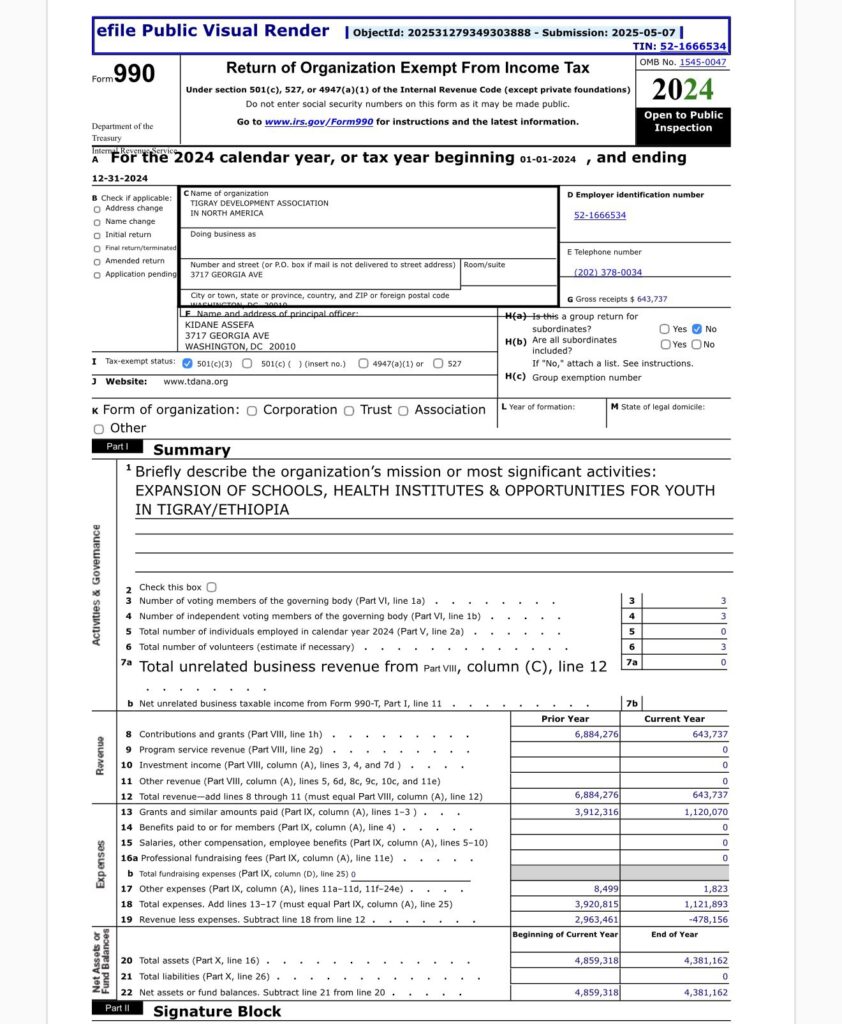
One organization frequently cited is the Tigray Development Association in North America, known as TDA. Financial records show that as of December 31, 2024, TDA held more than 4.38 million dollars in its bank account. Between 2020 and 2024, the association collected over 113 million dollars and spent roughly 109 million, leaving a net balance of about 4.3 million. These figures are not disputed. What remains unclear is why, amid famine like conditions in Tigray, millions remain idle while displacement camps report food shortages and preventable deaths.
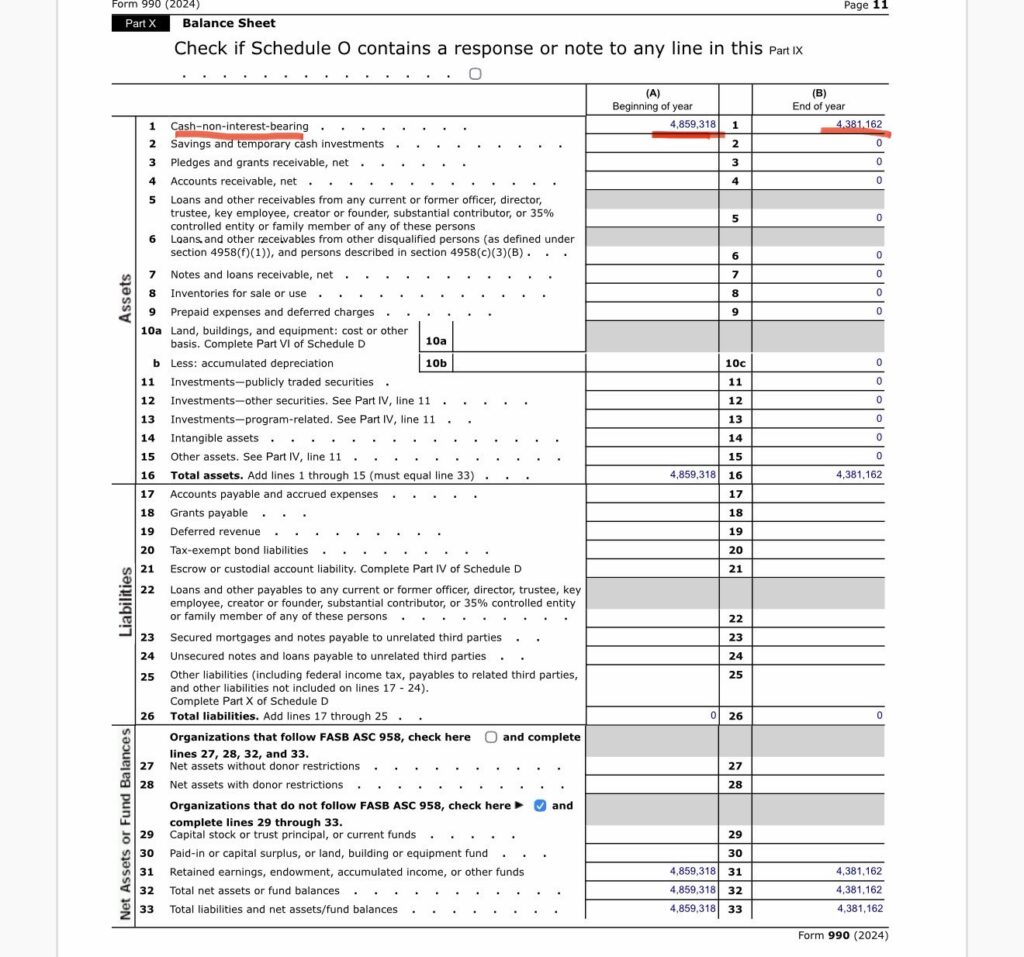
The yearly breakdown raises further questions. The bulk of funds were raised during the peak war years, particularly in 2021 and 2022. In 2021 alone, more than 64 million dollars were collected, with a surplus exceeding 10 million. Even in years when expenses exceeded collections, the overall balance remained positive. Yet there has been little public explanation about why emergency reserves are not rapidly deployed during what many describe as a life or death moment.
This is where the accusation of turning hunger into a business emerges. For years, TPLF aligned networks have framed Tigray’s suffering as a permanent emergency, a narrative that mobilizes donors, sustains fundraising campaigns, and reinforces political leverage abroad. Hunger becomes a tool. It justifies continued appeals, keeps the diaspora emotionally and financially engaged, and shields leadership from scrutiny by framing any criticism as betrayal during crisis.
On the ground, however, hunger does not wait for political calculations. Children wasting away in Hitsats or other camps gain nothing from bank balances held overseas. Communities facing famine need food deliveries, nutrition programs, and medical support now, not explanations later.
The issue is not whether Tigray is suffering. It is. The question is who controls the resources raised in its name, and to what end. Transparency, urgency, and accountability are not optional in a humanitarian crisis. When funds accumulate while people starve, the moral failure is stark.
Hunger in Tigray is real. But so is the growing perception that it has been institutionalized, managed, and leveraged by political actors who benefit from its persistence. Until humanitarian aid is fully separated from political agendas and financial opacity, Tigray’s civilians will continue to pay the price for a crisis that is no longer only about war or drought, but about power and profit.
Editor’s Disclaimer:
The views and opinions expressed in articles published by Horn News Hub are those of the authors and do not necessarily reflect the official position or editorial stance of Horn News Hub. Publication does not imply endorsement.