
Mekelle/Tel Aviv/Nairobi/Pretoria/London
Gold Above Graves: How TPLF’s Warlord Economy Turned Tigray’s Hunger into a Business Model
Analysis by Horn of Africa Geopolitical Review (HAGR)
In the aftermath of the two-year war in Tigray, the region’s ongoing humanitarian crisis is far from coincidental. While the international community focuses on the visible impacts of the conflict displacement, destruction, and human suffering there lies a darker reality beneath the surface: an entrenched system of political and economic exploitation that continues to deepen the suffering of millions.
As reports continue to surface from local and international investigative bodies, the situation in Northwestern and Western Tigray, home to a significant number of internally displaced persons (IDPs), paints a grim picture of deliberate neglect and exploitation. Hunger and disease have ravaged IDP camps, while illegal gold mining operations in these same areas have reached unprecedented levels. It appears that the wealth derived from these activities is funneled into the hands of powerful TPLF-aligned commanders, military networks, and external investors, turning a blind eye to the desperate needs of local communities.
A Region of Contradictions: Gold vs. Hunger
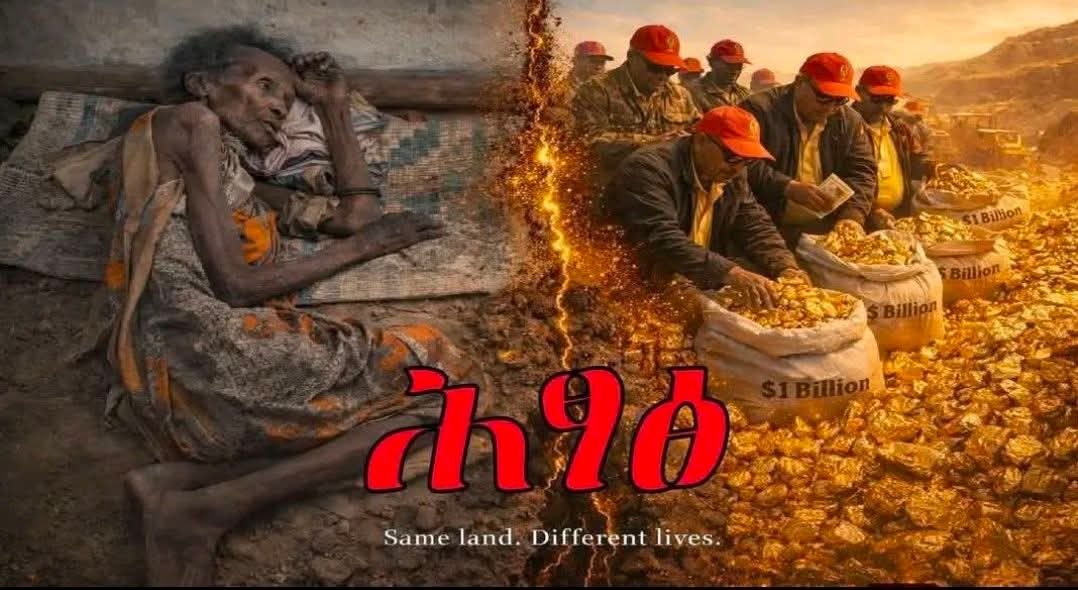
Tigray, a region rich in natural resources, has long been the site of mining activity. However, the post-war reality reveals a disturbing irony. While billions of dollars’ worth of gold is illicitly extracted from areas such as Hitsats, Meilin, and Zelazlen, the neighboring IDP camps, teeming with displaced people, suffer from severe shortages of food, medicine, and basic human needs.
Investigative reports suggest that these mining operations are protected by armed military commanders linked to the TPLF, with smuggling routes facilitating the illegal export of gold. Meanwhile, the residents of nearby camps face the devastating consequences of deliberate political and economic marginalization. The Tigray Regional Mining Bureau has reported significant gold deposits to the National Bank, yet these proceeds appear to be circulating in private hands, rather than contributing to the welfare of the region’s population.
The Predatory Political Economy of TPLF
This discrepancy is not merely an unfortunate side effect of war, but rather the result of a deliberate political and economic structure. Under the control of the Tigray People’s Liberation Front (TPLF), the region’s leadership has maintained a militarized economy, wherein the pursuit of party survival and the consolidation of power takes precedence over the basic needs of its people.
Reports indicate that, particularly in the areas of Western and Northwestern Tigray, military authority replaced civilian governance. Armed protection from former TPLF soldiers enabled the flourishing of illegal mining operations, where local populations were either conscripted into labor or left to suffer in squalid conditions.
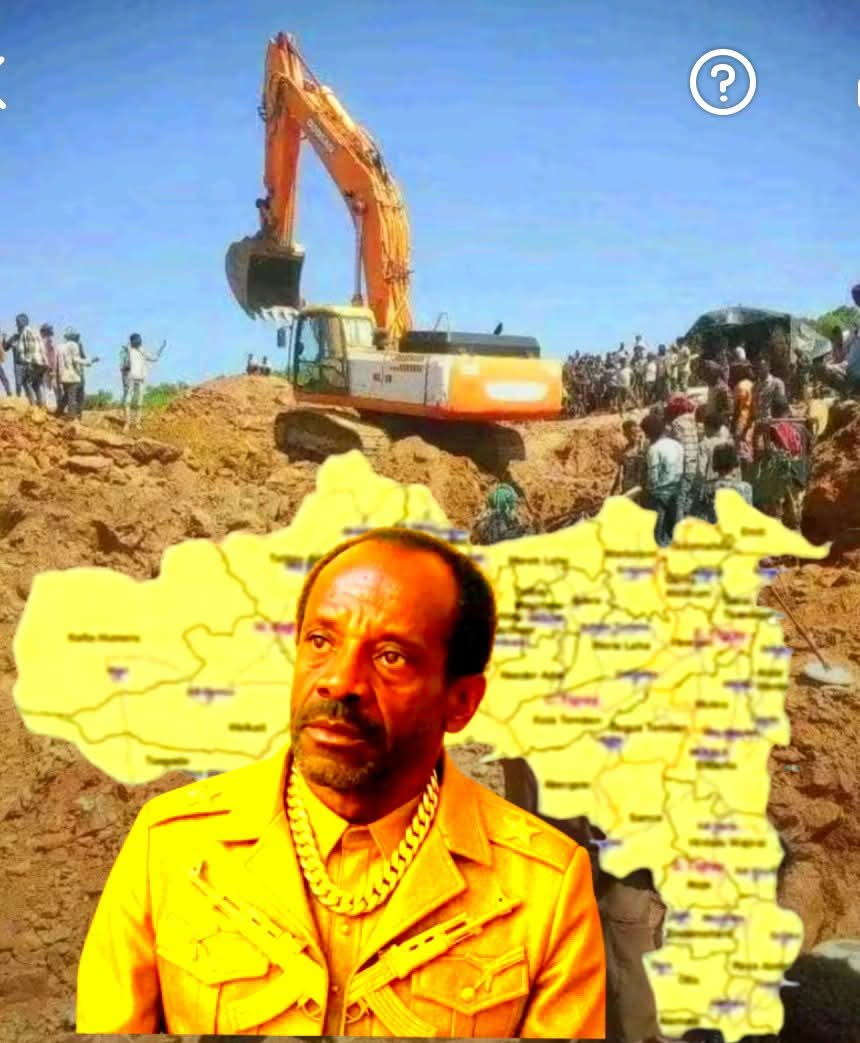
As military commanders such as General Migbey Haile controlled the extraction of wealth, the revenues generated flowed upward, enriching TPLF elites in Mekelle and other regional centers. Meanwhile, the IDPs, who had already lost their homes and livelihoods, were left to navigate a system that viewed them as disposable.
A Strategy of Delay and Exploitation
The political calculus behind this situation is chillingly simple: by maintaining instability and prolonging the displacement of Tigrayans, the TPLF ensures the perpetuation of this exploitative economy. Humanitarian aid, when provided, is often politicized and withheld from those in greatest need. Statements from TPLF cadres have reinforced the ideology that “saving the party comes first,” a mantra that has led to the suffering of millions in the region.
For the displaced, this has meant a continued struggle for survival, with little to no hope of returning home. Humanitarian organizations have reported that aid intended for IDPs is often diverted or restricted, further exacerbating their suffering. In the eyes of TPLF leadership, IDPs are not seen as victims of war they are seen as obstacles, political bargaining chips, and even tools for fundraising.
The Irony of ‘Liberation’ and the Home-Grown Genocide
The tragedy of Tigray’s post-war reality is a tale of moral collapse. TPLF, once a liberation movement, has been accused of shifting from an ideological fight for independence to a predatory system of governance that exploits its own people for political and financial gain. In this light, the term “genocide” takes on a new meaning: not just the mass killings that took place during the war, but the calculated destruction of a population’s ability to survive.
By controlling food access, weaponizing displacement, and extracting wealth from starving communities, the TPLF has effectively engaged in what some critics describe as a “home-grown genocide.” This term, while contentious, echoes the broader pattern of exploitation, where human lives are subordinated to the preservation of power and wealth. The comparison to the Khmer Rouge regime, notorious for its brutal treatment of its own people under Pol Pot, is often invoked, though TPLF’s actions are seen as more systemic and less overtly violent.
Moral and Political Implications
The core question raised by these developments is: how long can a political system that starves its people, exploits their resources, and prioritizes party survival over human welfare continue to maintain any legitimacy? The TPLF, by engaging in these practices, has not only betrayed its revolutionary roots but has also undermined its moral and political standing both within Tigray and on the international stage.
For the people of Tigray, the ongoing suffering caused by hunger, displacement, and the theft of their resources is a harsh reminder of the failure of the political system that once claimed to be their liberator. Tigray’s future, many argue, depends not on a return to TPLF’s rule, but on the dismantling of its warlord economy and the establishment of a new, more accountable political order.
Conclusion: The Need for Change
As Tigray continues to suffer under the weight of this criminal political economy, calls for change are growing louder. It is clear that TPLF’s ability to continue ruling the region depends on perpetuating its system of exploitation and oppression. But Tigray’s long-term survival depends on breaking free from this cycle of corruption and moral decay.
International actors, humanitarian organizations, and the people of Tigray themselves must now confront the reality that the war is far from over not in the military sense, but in the silent war of starvation, displacement, and economic extraction that continues unabated. A political leadership that profits from the misery of its people has no legitimacy left to hold power. Tigray needs more than a return to peace it needs a radical political transformation that can break the stranglehold of the warlord economy and offer its people a future rooted in justice, not exploitation.
Editor’s Disclaimer:
The views and opinions expressed in articles published by Horn News Hub are those of the authors and do not necessarily reflect the official position or editorial stance of Horn News Hub. Publication does not imply endorsement.