


ADDIS ABABA, September 25, 2026 (Horn News Hub) —
Telecommunications services were reportedly cut off across Ethiopia’s Tigray region late Thursday, raising concerns about access to banking, markets, digital payments and essential services.
According to a report by UMD Media, citing sources with direct knowledge of events leading to the shutdown, telecommunications services went down at approximately 10:21 p.m. local time on Thursday.
UMD Media reported that efforts to disconnect telecommunications had begun earlier in the week, with Tigray officials allegedly instructing network technicians in Mekelle to shut down services.
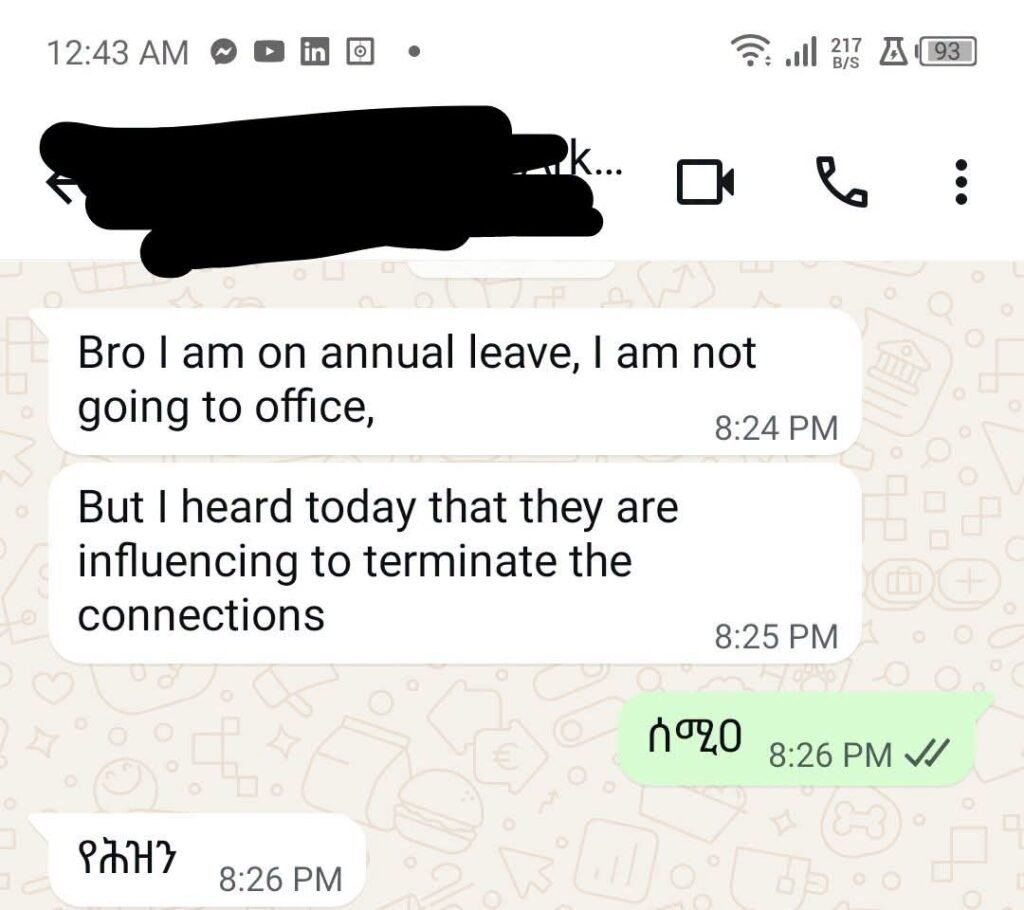
The report said technicians told officials that disconnecting Ethio Telecom’s network from Mekelle was not technically possible and would require action from Addis Ababa. Officials subsequently approached Safaricom Ethiopia, where personnel reportedly said a shutdown was technically possible but would require time.
UMD Media further reported that telecommunications personnel responsible for network operations were detained on Tuesday and Wednesday. According to sources cited by the outlet, some detained technicians were allegedly threatened and taken to a technical control room on Thursday evening before the network was eventually shut down.
Following the outage, Ethio Telecom users were reportedly unable to make or receive calls and experienced disruptions to internet-based messaging applications and social media. Some Safaricom users reportedly continued to access the internet.
Officials Named in the Report
UMD Media’s sources identified two Tigray officials whom they alleged were involved in pushing for the shutdown: Gebre Gebretsadik, also known as Gebre Adet, and Tigray Police Deputy Commissioner Gebreselassie Belay.

The report also included an allegation that Gebreselassie threatened one of the detained technicians. UMD Media said it had not independently verified the alleged threat or obtained responses from the officials named.
Concerns Over Banking and Markets
The telecommunications disruption could have significant consequences for businesses and households if it continues.
Banks, ATMs, mobile banking services, electronic transfers and digital payment platforms depend heavily on telecommunications connectivity. Traders and businesses also rely on telephone and internet services to communicate with suppliers and customers, arrange transportation, confirm payments and monitor market conditions.
A prolonged communications blackout could therefore affect banking services, remittances, trade, food distribution, humanitarian coordination and household livelihoods.
Tigray experienced extensive telecommunications and other essential-service disruptions during the 2020–2022 war. UMD Media noted that the current reported shutdown differs in that sources attribute the latest disruption to officials within Tigray.
The reasons behind the reported shutdown remain unclear. A telecommunications source cited by UMD Media suggested that concerns over security and the traceability of officials’ movements, as well as controlling the flow of information, could have been factors. These explanations have not been independently established.
The reported telecommunications shutdown comes amid heightened security developments in Tigray.
According to reports circulating in connection with the latest developments, TPLF-aligned forces have taken control of airports in Mekelle, Shire and Axum and arrested federal police officers who had been deployed to protect the facilities.
The reported developments underscore the rapidly changing security situation in the region as communications services remain disrupted.
Source: UMD Media