


Addis Ababa, Ethiopia — May 13, 2026 | Horn News Hub
The relationship between Ethiopia and France has increasingly evolved beyond conventional diplomacy into a broader strategic partnership shaped by shared political, economic, and security interests in the Horn of Africa. More than a century after formal diplomatic relations were established, the two countries are now positioning their cooperation around regional stability, economic transformation, cultural preservation, and maritime security.
President Emmanuel Macron’s arrival in Addis Ababa following his participation in the Kenya Africa Summit reflects the growing geopolitical significance both countries attach to the partnership. Analysts view the visit as part of France’s wider effort to strengthen its influence in East Africa while supporting Ethiopia’s ambitions to emerge as a key regional power.
Cultural Diplomacy and Heritage Preservation
One of the most visible dimensions of the partnership has been cultural diplomacy. France has played a leading role in supporting the restoration and preservation of Ethiopia’s historical and religious heritage, particularly the rehabilitation of the rock hewn churches of Lalibela, one of Africa’s most significant UNESCO World Heritage sites.
President Macron’s 2019 visit to Lalibela marked a turning point in the cultural relationship between the two countries. French technical expertise and financial support were subsequently directed toward preservation projects aimed not only at protecting historical structures but also at reinforcing Ethiopia’s cultural identity and tourism potential.
The restoration of Ethiopia’s National Palace has similarly become a symbol of the expanding diplomatic relationship. Ethiopian officials, including Prime Minister Abiy Ahmed, have repeatedly framed the cooperation as evidence of a broader renaissance in bilateral ties that combines heritage, diplomacy, and modernization.
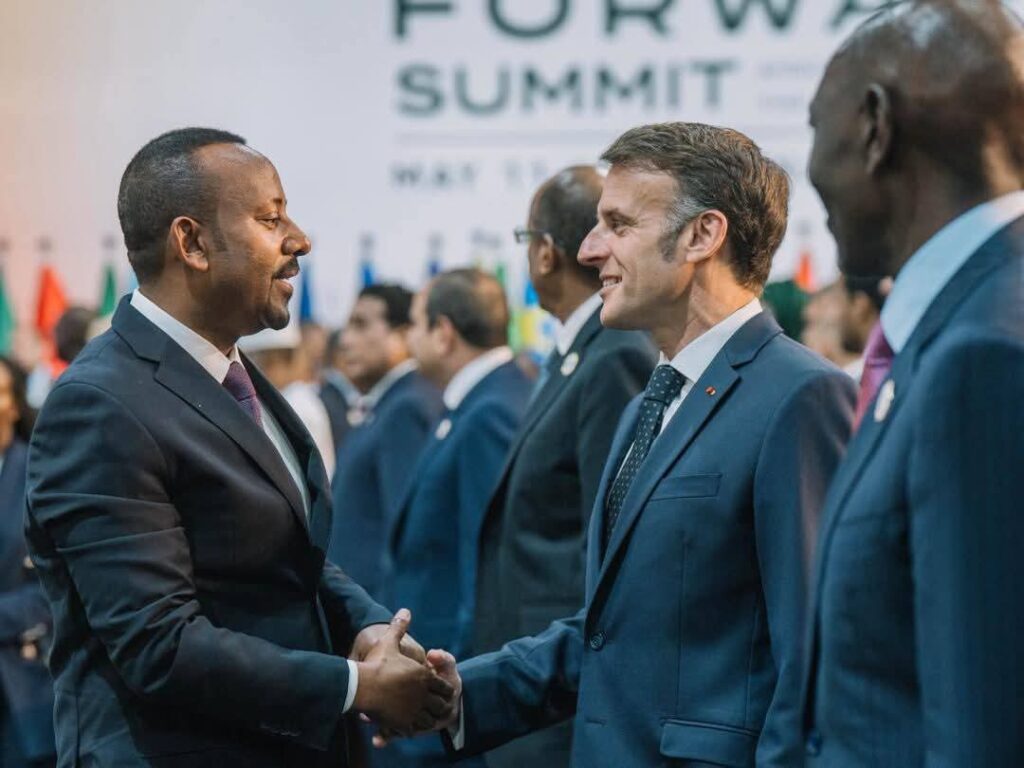
Beyond symbolism, observers note that cultural diplomacy has become an important soft power instrument for France in Africa, particularly at a time when European influence on the continent is undergoing significant recalibration.
Economic Cooperation and HGER 2.0
Economic collaboration has also become central to the France Ethiopia partnership. France has emerged as one of the major European supporters of Ethiopia’s macroeconomic reform agenda and debt restructuring efforts under the G20 Common Framework for Debt Treatment.
The two countries formalized a major bilateral understanding in 2025, paving the way for expanded financial cooperation. That momentum accelerated in February 2026 when both governments concluded an 81.5 million Euro agreement aligned with Ethiopia’s Homegrown Economic Reform Agenda, commonly referred to as HGER 2.0.
According to officials, the package includes 80 million Euros in direct budgetary support alongside 1.5 million Euros allocated for technical and institutional capacity building. Ethiopian authorities view the support as critical for sustaining ongoing reforms aimed at stabilizing inflation, restructuring debt obligations, liberalizing sectors of the economy, and attracting foreign investment.
For France, the partnership represents both an economic and geopolitical investment. European policymakers increasingly see Ethiopia, despite years of internal conflict and economic pressures, as a strategically important market and a potential anchor of stability in the Horn of Africa.
Regional analysts argue that supporting Ethiopia’s economic recovery also serves broader international interests by reducing instability that could spill across the region.
Maritime Security and the Red Sea Geopolitics
Perhaps the most strategically consequential pillar of the partnership lies in maritime and security cooperation.
France has played a major role in supporting the rebuilding of the Ethiopian Navy following Addis Ababa’s decision to reestablish naval capabilities despite being landlocked since Eritrea’s independence in 1993. Cooperation has reportedly included institutional training, technological assistance, and human capital development.
French officials have publicly acknowledged Ethiopia’s strategic interest in securing reliable maritime access through peaceful and mutually beneficial arrangements. President Macron previously described Ethiopia’s search for sea access as a legitimate strategic concern linked to regional economic integration and long term stability.
The issue remains highly sensitive in the Horn of Africa, where access to ports and maritime corridors carries deep geopolitical implications involving the Red Sea, Gulf states, and global trade routes.
Supporters of the France Ethiopia partnership argue that a stronger Ethiopian role in maritime security could contribute to safeguarding one of the world’s busiest commercial corridors. The Red Sea remains central to international trade flows linking Europe, Asia, and the Middle East, while also facing persistent threats ranging from piracy to geopolitical competition and armed conflict.
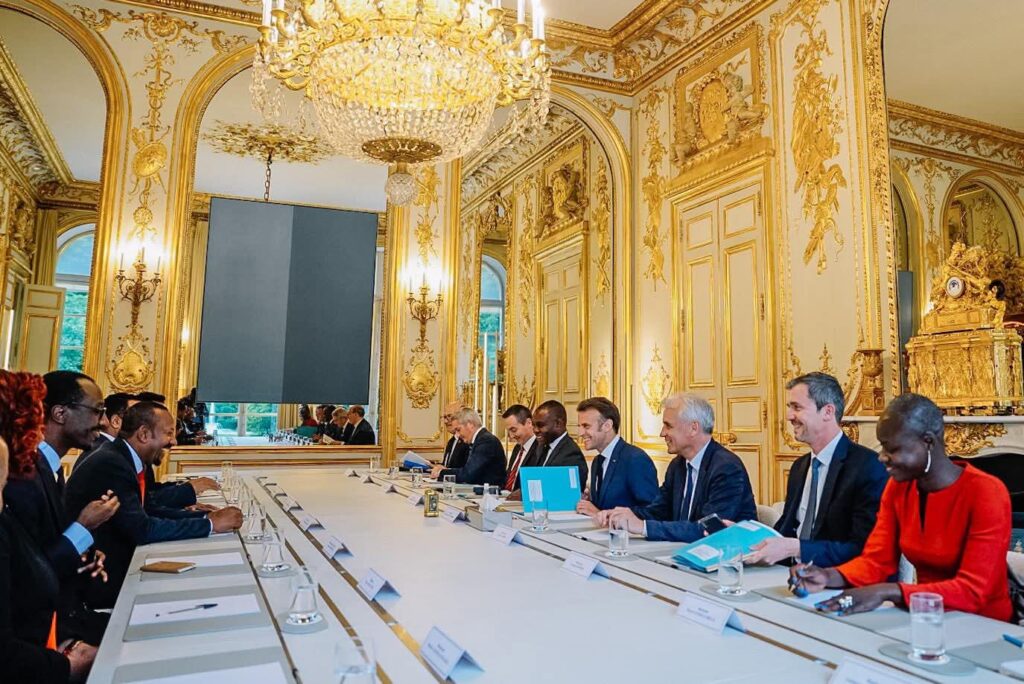
From Paris’ perspective, strengthening Ethiopia’s naval and security institutions may help cultivate a regional partner capable of contributing to collective security arrangements in East Africa and the Red Sea basin.
Migration, Security, and the “Coastline Guard” Concept
The expanding maritime relationship also intersects with European concerns over irregular migration and regional instability.
Some strategic observers increasingly describe Ethiopia as a potential stabilizing force in the Horn of Africa capable of indirectly functioning as a regional “Coastline Guard.” The concept reflects the belief that stronger economic resilience, improved governance, and enhanced security cooperation in Ethiopia could reduce the underlying drivers of mass migration toward Europe.
European governments have long emphasized addressing migration “at the source” through development partnerships, conflict prevention, and economic investment. Within that framework, Ethiopia’s stabilization is viewed as essential because of its demographic size, regional influence, and geographic position near key migration corridors.
Analysts argue that improved economic opportunities and greater regional integration could reduce the incentives that drive dangerous migration journeys across North Africa and the Mediterranean.
At the same time, critics caution that migration management strategies centered on security cooperation must be balanced with human rights protections, political inclusiveness, and sustainable development to avoid creating further tensions.
A Strategic Blueprint for Afro European Relations
The evolving relationship between France and Ethiopia increasingly reflects a broader transformation in Afro European diplomacy. Rather than relying solely on traditional aid structures, the partnership is being framed around mutual strategic interests that include economic modernization, security cooperation, infrastructure development, and regional integration.
As President Macron meets Ethiopian leaders in Addis Ababa, the discussions are expected to focus not only on bilateral interests but also on wider regional dynamics affecting the Horn of Africa and the Red Sea corridor.
Diplomatic observers say the partnership illustrates how African and European states are redefining cooperation through long term geopolitical calculations rather than short term political engagements alone.
For Ethiopia, the relationship offers international backing at a time when the country is seeking economic recovery, regional influence, and expanded global partnerships. For France, deeper engagement with Ethiopia provides strategic access to one of Africa’s most influential states in an increasingly contested geopolitical region.
Whether the partnership ultimately succeeds will depend on its ability to translate diplomatic ambition into measurable gains in peace, economic integration, and regional stability.
Editor’s Disclaimer:
The views and opinions expressed in articles published by Horn News Hub are those of the authors and do not necessarily reflect the official position or editorial stance of Horn News Hub. Publication does not imply endorsement.